Brosisincorp Sapele Wood & Real Wood Home Products

Brosisincorp makes wood products the way the material deserves to be treated β€” sourced from FSC-certified forests, processed without synthetic adhesives or toxic treatments, and built to outlast whatever cheap alternative you're replacing. The catalog spans four lines: sapele wood cutting boards, black walnut shoe horns, Paulownia and pine wall panels, and solid-core shaker bifold doors β€” 7 products across kitchen, bedroom, and living space, rated between 4.0 and 4.7 stars on Amazon by buyers who read the specs before they ordered. The shared thread isn't a design aesthetic. It's a sourcing philosophy: if the wood species matters, name it; if the construction method matters, document it; if a treatment would compromise the product, skip it.
βœ“ Single-piece solid woodβœ“ No hidden adhesivesβœ“ Clean processing every line
Shop on Amazon
Brosisincorp Sapele Wood Cutting Board One Piece No Glue 15.74"L*11.81"W Brosisincorp Wooden Shoe Horn Long Handle 23.6" for Seniors Helper 1 Pack
FSC-Certified Wood Across Every Product Line

Every Brosisincorp product starts with wood sourced from FSC-certified forests β€” not a marketing add-on, but the baseline for how the brand selects raw material across all four lines.

No Glue, No BPA, No Hidden Toxins

From the single-piece sapele cutting boards to the solid walnut shoe horn, every Brosisincorp product is built without synthetic adhesives, BPA, phthalates, or formaldehyde β€” verified by construction method, not just a label claim.

Featured in Three Non-Toxic Product Roundups

The sapele cutting board line has been independently featured by mychemicalfreehouse.net, mamavation.com, and thefiltery.com β€” three editorial sources specifically covering non-toxic kitchen products, none of which are paid placements.

Hardware Included, 90% Pre-Assembled on Arrival

The shaker bifold door ships with a complete hardware kit β€” top-mount track, rollers, and knob β€” and arrives 90% pre-assembled, so installation doesn't require a separate trip to the hardware store.

Four Wood Product Lines, One Sourcing Standard

Brosisincorp's cutting boards, shoe horn, wall panels, and bifold doors don't share a design language so much as a material commitment β€” real, named wood species processed cleanly and built for long-term use. Whether you're outfitting a kitchen, a closet, or an accent wall, the same sourcing logic applies across every line.

Products Buyers Come Back and Recommend

These are the products that generate the most repeat purchases and the most specific review language β€” buyers describing exactly what problem got solved rather than just leaving a star rating. The sapele cutting boards lead by sales volume (55% of total), the walnut shoe horn holds a 4.7-star rating across 251 reviews, and the wall panel line covers three distinct installation preferences for anyone building an accent wall without a contractor.

Brosisincorp Sapele Wood Cutting Board One Piece No Glue 15.74"L*11.81"W
cutting board

Sapele Handle Cutting Board

See on Amazon
Brosisincorp Wooden Shoe Horn Long Handle 23.6" for Seniors Helper 1 Pack
shoe horn

Walnut Long Shoe Horn

See on Amazon
Brosisincorp 30" x 80" Solid Wood Core Shaker Bifold Closet Door 3-Panel
bifold closet door

Shaker Bifold Door

See on Amazon
Brosisincorp Real Wood Shiplap Peel and Stick Wall Panel White 10 Pcs
wall wood plank panel

Shiplap Peel-Stick Panel Multi

See on Amazon
Brosisincorp Sapele One Piece Wood Cutting Board With Feet 17.71"Lx11.81"W
cutting board

Sapele Rubber Feet Board

See on Amazon
cutting board

Sapele Cutting Boards With No Glue Joints

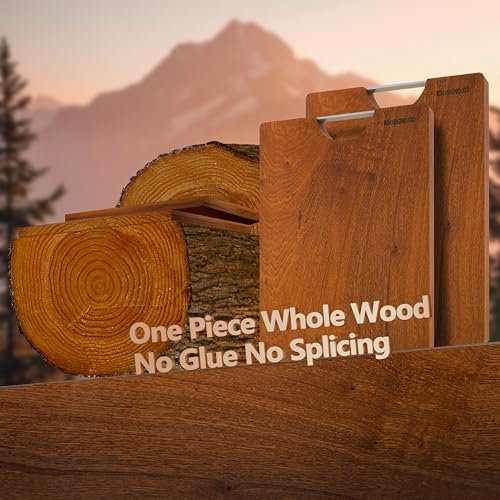
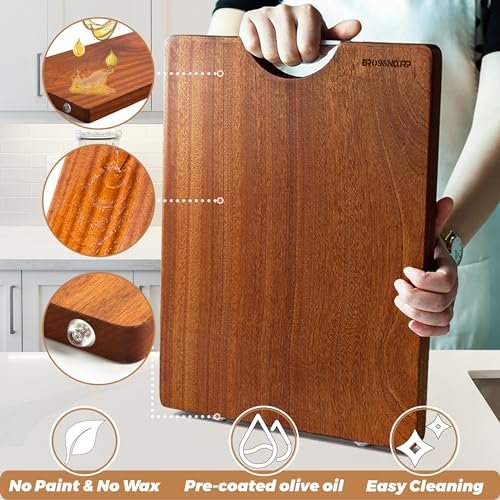
Both boards in this line start with a single unbroken piece of African sapele hardwood β€” no lamination, no hidden adhesive layers, no filler wood in the core. The flagship Sapele Handle Cutting Board holds a 4.5-star rating across 366 Amazon reviews and a 4.9-star aggregate across 13 Wayfair reviews. Each board is processed through a two-stage drying method: high-temperature baking at 491Β°F to drive moisture below 12%, followed by low-temperature curing for internal stability, then a coat of food-grade mineral oil before it ships. The result is a board that won't warp the way improperly dried wood does β€” and one that contains no BPA, phthalates, or formaldehyde.

What to look for

  • Size β€” measure your counter clearance first. The range runs from 14.2" Γ— 9.5" up to 17.71" Γ— 11.81"; bigger isn't always better if the board crowds your prep space.
  • Feet configuration β€” the Handle Board uses integrated silicone feet on both sides (no assembly); the Rubber Feet Board has 0.7" detachable rubber feet that require a screwdriver to attach. Both hold firmly on countertops, but the detachable feet add meaningful elevation.
  • Handle style β€” the stainless steel handle works for hanging storage and carrying; if wall hooks aren't part of your kitchen setup, it's still useful for lifting but doesn't change how the board performs.
  • Maintenance commitment β€” both boards need monthly food-grade mineral oil and hand-washing only. No dishwasher, no soaking. If that's not workable in your kitchen, a plastic board is genuinely a better fit.

In this category

  • Sapele Handle Cutting Board β€” the flagship: four size options, integrated silicone feet on both sides, reversible double-sided layout for separating raw meat from produce, and the highest review count in the catalog at 366 ratings.
  • Sapele Rubber Feet Board β€” same single-piece sapele construction as the Handle Board but with detachable 0.7" rubber feet that require brief screwdriver assembly; the added elevation suits buyers who prefer a raised cutting surface.

Sapele vs Plastic, Bamboo, and Acacia Boards

Sapele's closed-grain structure makes it meaningfully different from the other cutting board materials most people have already tried. The short version: plastic sheds microplastics, bamboo relies on adhesives, acacia absorbs moisture through open pores, and glass destroys knife edges. Sapele sidesteps all four problems β€” but it's worth understanding why, not just taking that claim at face value.

Why Plastic Boards Keep Coming Up in Non-Toxic Searches

Plastic boards β€” including polypropylene and polyethylene β€” are technically dishwasher-safe, which makes them appealing for hygiene reasons. The problem is the surface. Research published in the journal Environmental Science & Technology found that cutting on plastic boards releases microplastic particles directly into food. One study estimated that a single board generates tens of thousands of microplastic fragments per year of normal use. That's the specific concern driving the non-toxic cutting board conversation on Reddit's r/PlasticFreeLiving and r/moderatelygranolamoms β€” not vague "toxin" fears, but documented particle transfer.

Sapele doesn't shed. It's a solid wood surface that wears slowly and shows knife marks over time β€” those marks can be sanded away β€” but it doesn't release material into your food.

The Bamboo Adhesive Problem

Bamboo boards are marketed aggressively as "natural" and "eco-friendly," and bamboo itself is a fast-growing grass with legitimate environmental credentials. The issue is construction. Almost every bamboo cutting board on the market is laminated β€” individual bamboo strips pressed together with adhesive under high heat and pressure. That adhesive almost always contains formaldehyde-based resins, and the joint lines are where bacterial buildup concentrates over time.

Brosisincorp Sapele Wood Cutting Board One Piece No Glue 15.74"L*11.81"W

The Brosisincorp sapele boards are a single unbroken piece of hardwood. No glue joints. No adhesive between layers. There's nothing to delaminate and no joint gaps where bacteria and moisture accumulate. That's the construction difference that actually matters for food safety.

Acacia and the Open-Grain Argument

Acacia is a real wood, and many acacia boards are genuinely attractive. But acacia is an open-grain species β€” its pores are larger and more permeable than sapele's. That means more moisture absorption per use, faster surface degradation, and a higher maintenance burden to keep the board from warping. Sapele's closed-grain structure requires the same monthly mineral oil application, but it starts from a more water-resistant baseline. The dual-stage processing β€” 491Β°F baking to drive out excess moisture, followed by low-temperature curing to below 12% moisture content β€” reinforces that resistance before the board ever reaches a kitchen.

Glass and Ceramic Are Hard Passes

Glass and ceramic boards solve the bacterial question by being non-porous and dishwasher-safe. They also destroy knife edges at a pace that no professional cook or serious home cook would tolerate. Sapele is hard enough to resist deep cuts (harder than many domestic hardwoods), but soft enough that it doesn't damage the blade geometry on a quality chef's knife. That balance β€” resisting the knife while protecting it β€” is what edge-grain hardwood construction is designed to deliver.

The Short Version

  • Plastic: dishwasher-safe, but releases microplastic particles during cutting β€” the core problem for non-toxic buyers
  • Bamboo: natural material, but almost always laminated with formaldehyde-based adhesives; joint lines accumulate bacteria
  • Acacia: real wood, but open-grain; absorbs moisture faster, warps sooner, higher maintenance burden
  • Glass/ceramic: fully hygienic surface, but dulls knife edges aggressively with every use
  • Sapele: closed-grain, single-piece, no adhesives, processed to below 12% moisture content β€” the specific properties that address each of the above problems

One honest limit: sapele boards still need hand-washing and monthly oiling. If "throw it in the dishwasher" is a non-negotiable requirement, sapele isn't the right material β€” no wood board is.

How to Oil and Maintain Your Sapele Board

Brosisincorp Sapele Wood Cutting Board One Piece No Glue 15.74"L*11.81"W

A sapele board arrives pre-oiled with one coat of food-grade mineral oil. That's a starting coat, not a permanent treatment. The board needs ongoing maintenance to stay flat, stable, and hygienic β€” and the maintenance protocol is straightforward enough that most people follow it consistently once they understand what each step actually does.

Monthly Oiling Protocol

Apply food-grade mineral oil once a month β€” more often in the first few months of use, especially if the board is new. Here's the process:

  • Make sure the board is completely dry before oiling. Applying oil to a damp surface traps moisture inside the wood fiber rather than sealing it out.
  • Pour a generous amount of food-grade mineral oil directly onto the surface. Don't use olive oil, vegetable oil, or coconut oil β€” those are food-grade, but they go rancid inside the wood and create an odor problem within weeks.
  • Rub the oil into the surface with a clean cloth, moving with the grain. Cover the entire board β€” top, bottom, and all four sides.
  • Let it soak in for at least two hours, or overnight if you can. The wood will absorb more than you expect the first few times.
  • Wipe off any excess with a dry cloth. A properly oiled board shouldn't feel greasy after the excess is removed.

You'll know the board is due for oiling when water no longer beads on the surface β€” it absorbs instead of rolling off. That's the visual cue.

Daily Care After Each Use

Wipe the board with a damp cloth or a soft brush and warm soapy water. Rinse briefly. Don't soak it.

The dishwasher, soaking in a sink, and prolonged water exposure are the three fastest ways to warp a wood board β€” any wood board, not just sapele. The sapele's below-12% moisture content gives it more stability than less-processed alternatives, but that protection depends on not overwhelming the wood's capacity with extended water contact. The high-temperature baking and curing process reduces moisture before oiling; your maintenance keeps it there.

Drying and Storage

After washing, stand the board upright on its edge β€” not flat on the counter. This lets both faces dry at the same rate. A board left flat with one wet face and one dry face will cup toward the dry side as the wet face expands and the dry face doesn't. Standing it upright equalizes the drying across both surfaces and is the single most effective warping-prevention habit you can build.

Don't store it leaning against a surface indefinitely at a steep angle β€” a slight lean against the wall while it dries is fine, but long-term storage flat or in a sealed cabinet with poor air circulation accelerates moisture buildup.

When the Surface Needs Resanding

Knife marks accumulate over time. That's normal and expected. When the surface starts to feel rough to the touch or shows deep grooves, sand it with 120-grit sandpaper, then finish with 220-grit. Move with the grain on both passes. After sanding, the wood is open and thirsty β€” apply mineral oil immediately and let it soak overnight before using the board again.

Resanding removes the worn surface layer and exposes fresh wood, which is why a properly cared-for sapele board can last for decades rather than years. The construction β€” single piece, no glue joints β€” means there's no lamination layer to sand through and no adhesive to expose.

What to Skip

No microwave. No dishwasher. No soaking. No sealed finish (polyurethane, lacquer, varnish) β€” a film finish gets cut through immediately and creates a more complex surface problem than an oiled board. Mineral oil stays in the wood fiber; it doesn't form a surface film that can chip or peel into food.

How to Choose the Right Brosisincorp Product

Every Brosisincorp product is built from real, named wood β€” sapele, black walnut, Paulownia, pine β€” processed without hidden adhesives or toxic treatments. But the four product lines exist for genuinely different situations. Here's how to figure out which one belongs in your home.

Choose the Sapele Cutting Board if you're upgrading your kitchen prep surface. The Sapele Handle Cutting Board and Sapele Rubber Feet Board both start with a single unbroken piece of African sapele hardwood β€” no glue joints, no lamination, no BPA or formaldehyde. That construction is the entire point. If you've been on Reddit threads debating microplastics in plastic boards or adhesive content in bamboo, this is what those threads describe as the right answer. The Handle Board comes in four size options; the Rubber Feet Board in three. Both use the same high-temp baking and low-temperature curing process to bring moisture content below 12% before any oil is applied. They're not interchangeable β€” choose the Handle Board if you want silicone feet and a slightly thinner profile; choose the Rubber Feet Board if you want the taller stance that the assembled rubber feet provide and prefer a screwdriver-assembly setup.

Choose the Walnut Long Shoe Horn if bending to put on shoes has become a daily frustration. At 23.6 inches, the solid black walnut horn lets most adults slip on shoes from a standing position without bending at the waist or knees. It's available in black walnut and red beech variants. This is the right product for anyone recovering from hip or knee surgery, for anyone who simply doesn't want to crouch first thing in the morning, or for anyone who has already snapped two plastic shoe horns this year. What it isn't: a decorative accessory that sits in a drawer. It's 0.25 lbs of solid walnut with a leather hanging strap β€” meant to be used daily and within reach.

Choose the Shaker Bifold Door if you're replacing a closet or pantry door and want solid construction, not hollow cardboard. The Shaker Bifold Door ships pre-assembled, arrives primed in three coats of paintable white primer, and includes the full hardware kit. The solid wood core delivers 25dB of sound insulation β€” a specific, verifiable number that most bifold competitors don't publish at all, because hollow-core doors can't match it. It fits standard rough openings in 24", 30", and 36" widths, all at 80" height, and can be trimmed up to 0.4" from the top or bottom. It's a new listing with limited reviews β€” honest caveat β€” but the construction specs are documented and the installation design is built around DIY access without contractor involvement.

Choose a Wall Wood Plank Panel if you're adding a wood-grain accent wall and want real wood, not vinyl. This is the clearest question to answer before ordering anything in this category: is it actual wood, or is it a PVC film printed to look like wood? Brosisincorp's peel-and-stick planks are real Paulownia or pine β€” the adhesive is applied to the back of a real wood plank, not to the back of a plastic sheet. Each box covers 12.4 square feet. If you're comfortable with a peel-and-stick process and have a clean, dry, primed wall, either the Shiplap Peel-Stick Panel Multi or the Shiplap Peel-Stick Panel Light will work. If you'd rather nail or brad-nail for a more permanent install, the Barn Wood Nail-Up Plank is 48 inches long, 5.5 inches wide, and 0.31 inches thick β€” thicker and wider than the peel-and-stick options, and covers 11 square feet per box of 6.

How Sapele Stacks Up Against the Competition

We pulled this independent head-to-head into our site because it asks the questions our customers ask us β€” how fast does a board dull your knives, how well does it resist warping, and does the material actually hold up over time. The reviewer tested eight boards across plastic, rubber, composite, and natural wood, and measured real performance instead of just describing how each one looks. You'll see exactly where wood boards win and where they fall short β€” which is why we're confident enough to point you toward it before you decide whether sapele is the right call for your kitchen.

What Brosisincorp Buyers Say After Real Use

"I've been through four cutting boards in six years β€” two bamboo, one acacia, one mystery 'hardwood' that delaminated after three months. This sapele board is one piece, no seams, no glue lines anywhere I can find. I've been oiling it monthly and it's flat as the day it arrived. The handle is a nice touch for hanging it on the wall between uses."
β€” Renata K., non-toxic kitchen upgrade, on Cutting Boards
"My one criticism is that it didn't come with much care guidance in the box β€” I had to look up the oiling schedule online. Once I figured that out, zero complaints. The surface is genuinely smooth, and the silicone feet don't budge on my countertop. For a board this size, the weight feels right β€” substantial without being annoying to move."
β€” Joel M., home cook researching non-toxic options, on Cutting Boards
"My dad is 72 and has bad knees. He was using a 10-inch plastic horn that still required him to crouch. I got him the walnut one and he called me the next day specifically to say it worked standing upright. The leather strap hangs on his bedroom door handle. He's not a sentimental guy but he mentioned the wood feels 'warm' compared to the metal ones he'd tried."
β€” Diane F., shopping for a mobility-limited parent, on Shoe Horns
"Solid black walnut, 23.6 inches, and it hasn't flexed or cracked after eight months of daily use. I was skeptical that wood could outlast a metal horn but here we are. The one thing I'd flag: if you're expecting it to be completely uniform in color, it won't be β€” walnut has natural variation. I think it looks better for it, but worth knowing."
β€” Marcus T., everyday user replacing a broken plastic horn, on Shoe Horns
"Every bifold door I've installed in the last decade has been hollow-core and every one of them has eventually jumped the track or rattled. This one feels different β€” the panels are noticeably heavier and the hardware that came in the box is the kind of thing I'd normally have to source separately. Still early days with only a few months of use, but the track has stayed true."
β€” Greg A., home renovator upgrading a closet, on Bifold Closet Doors
"I want to be upfront: I ordered one pack first as a color test before committing to a full wall β€” which I'd strongly recommend. The Autumn Tan Paulownia was spot-on from the photos. Real wood grain, not a printed film. The planks are lighter than I expected but they've held through two months on a bedroom accent wall with no lifting at the edges. Surface prep mattered β€” I cleaned and primed the drywall first."
β€” Sarah L., DIY decorator doing a bedroom accent wall, on Wall Wood Plank Panels

Common Questions About Brosisincorp Products

Is sapele wood actually food-safe for a cutting board?

Yes. Sapele is classified as food-safe when treated with food-grade oil, which is exactly how Brosisincorp finishes each board β€” one coat of food-grade mineral oil applied before shipping. The boards contain no adhesives, no BPA, no phthalates, and no formaldehyde. Single-piece construction eliminates glue joints, which are the primary bacterial trap in laminated boards. You'll want to reapply mineral oil monthly and hand-wash only β€” no dishwasher, no soaking.

Are the sapele cutting boards really one piece, or are they glued together?

One piece. The Sapele Handle Cutting Board and Sapele Rubber Feet Board are each cut from a single sapele log β€” no glue joints, no lamination, no hidden adhesives. The product specs list "no glue no joint" explicitly, and it's the main reason these boards appear in non-toxic roundups on sites like mychemicalfreehouse.net and mamavation.com. If you see a seam, it's the natural grain of the wood, not a joint.

What are the disadvantages of sapele wood for cutting boards?

Sapele is an edge-grain board, not end-grain, so deep knife cuts will be more visible over time than on an end-grain surface. It also requires monthly oiling β€” skip that and the wood can dry out and crack. It won't survive a dishwasher or prolonged soaking. None of these are deal-breakers, but if you want a truly maintenance-free board, sapele isn't it. It's for people who'll spend two minutes a month on upkeep in exchange for a board that lasts years.

Which Brosisincorp sapele board size should I buy?

The Sapele Handle Cutting Board comes in four sizes ranging from 14.2" Γ— 9.5" up to 17.71" Γ— 11.81". For most home cooks, the 15.74" Γ— 11.81" size handles everything from vegetable prep to breaking down a whole chicken. The smaller 14.2" Γ— 9.5" works well as a secondary board or for tighter countertop setups. Check your counter depth before ordering β€” the largest size needs real estate to stay stable.

How do you prevent a wood cutting board from warping?

Two things cause warping: excess moisture and uneven drying. Never soak the board or run it through a dishwasher. After washing, stand it upright on its edge so air circulates on both faces equally β€” laying it flat traps moisture on the bottom. Brosisincorp's sapele boards are processed to below 12% moisture content before shipping, which gives you a stable starting point, but proper drying and monthly oiling keep it there.

Is the 23.6-inch shoe horn long enough to use without bending?

For most adults, yes. The 23.6-inch handle on the Walnut Long Shoe Horn reaches from standing height to floor level without requiring you to bend at the waist or knees. It's designed specifically for seated use or for anyone with limited hip and knee mobility β€” post-surgery patients, pregnant women, seniors. The 1.57-inch handle width gives a solid grip. If you're very tall or need a longer reach, note that some competitors offer handles up to 31.5 inches.

Is a wood shoe horn better than a metal one for everyday use?

Wood and metal each have a real trade-off. Metal horns β€” like the commonly recommended IKEA OmtΓ€nksam at 31.5 inches β€” are longer and essentially unbreakable. Wood horns, including the Brosisincorp walnut version, stay closer to room temperature, which matters in winter when cold metal against your heel is genuinely unpleasant. Black walnut is hard enough for daily use without risk of snapping, provided you use it as a guide rather than a prying tool. If maximum length is your priority, metal wins. If comfort in your hand is the priority, wood holds up well.

Do shoe horns actually work for putting on dress shoes?

Yes, and consistently. The curved shape of the Walnut Long Shoe Horn guides your heel past the shoe's collar without collapsing the back. Brosisincorp sands the surface smooth specifically so it won't snag leather β€” this is the practical concern with rough or unfinished wood near dress shoes. The horn fits sneakers, loafers, boots, and dress shoes. The main thing it doesn't do well is work with extremely narrow openings; for those, you still need to loosen the laces first.

Are bifold closet doors outdated in 2025?

No β€” but hollow-core bifold doors with flimsy hardware deserve their bad reputation. The format itself is efficient: a bifold door uses roughly half the swing clearance of a standard hinged door, which matters in tight closets, pantries, and laundry rooms. The issue has always been construction quality. Brosisincorp's Shaker Bifold Door uses a solid wood core rated at 25dB sound insulation β€” meaningfully heavier and quieter than the hollow-core standard β€” and ships with a complete hardware kit already included.

Is the peel-and-stick wall panel real wood or a vinyl sticker?

Real wood. The Shiplap Peel-Stick Panel Multi and Shiplap Peel-Stick Panel Light are actual Paulownia or pine planks with a peel-and-stick adhesive backing applied to the rear β€” not vinyl, not PVC, not a wood-printed film. Each plank measures 35.43" Γ— 5" and covers real wood grain that you can feel. The lightweight feel that surprises some buyers is a property of Paulownia specifically, not a sign of lower quality β€” the species is genuinely low-density, which is what makes them cuttable with a utility knife.

One Sourcing Standard Across Every Product Brosisincorp Makes

Brosisincorp was founded by designers and craftsmen with a straightforward premise: most "wood" home products aren't actually what they claim. A cutting board advertised as hardwood is often laminated pieces held together with adhesives. A "real wood" wall panel turns out to be a vinyl film with a wood texture printed on it. A bifold door feels hollow because it is β€” cardboard honeycomb inside a thin MDF shell. Brosisincorp started with the cutting board line specifically because that's where the gap between the claim and the reality is easiest to prove. Single-piece sapele, no glue joints, no formaldehyde, no BPA β€” everything verifiable before the buyer even opens the box.

The shoe horn line came from the same logic applied to a different product category. Black walnut is one of the harder North American hardwoods. It doesn't snap under normal daily use the way plastic horns do, it doesn't feel cold against your hands in winter the way metal does, and at 23.6 inches the handle reaches the floor without the user needing to bend. The wall panel line extends the real-wood commitment into a category dominated by PVC β€” the Paulownia and pine planks in both the peel-and-stick and nail-up formats are genuine wood, processed through high-temperature carbonization to remove VOCs and improve dimensional stability. And the Shaker Bifold Door line brings the same density and construction honesty to interior millwork: a solid wood core rated at 25dB sound insulation, not the hollow-core standard that defines most of what's sold in this category.

Across cutting boards, shoe horns, wall panels, and bifold doors, the sourcing philosophy is consistent: FSC-certified wood, near-zero material waste (offcuts become smaller accessories rather than landfill), and processing steps that are documented rather than vague. That's not a marketing position β€” it's the reason the sapele cutting board line appears in independent non-toxic product roundups while most competitors making similar claims don't. The products don't all serve the same room or the same buyer. But they're made by people who find it genuinely irritating when a product doesn't match what its label says.

Useful Guides

Marcus here β€” answers to the questions we hear most often about wood products, installation, and long-term care.

About Brosisincorp

Brosisincorp is a home products brand selling across four categories β€” sapele wood cutting boards, black walnut shoe horns, real wood wall panels, and solid-core shaker bifold doors β€” all available through the Brosisincorp Store on Amazon. The common thread across every product line is real wood construction and clean, documented processing. You can browse the full catalog at the official Brosisincorp Store on Amazon.com.

Customer Support

For questions about a specific product β€” sizing, installation, wood care, or order status β€” the fastest route is through Amazon's built-in messaging system on any Brosisincorp product page. The team handles questions across all product lines through a single Amazon seller account. For pre-purchase sizing questions on the bifold door or wall panel lines, checking the product Q&A section on the listing often turns up answers faster than waiting for a message reply.

Returns and Warranty

All Brosisincorp products sold through Amazon are covered by Amazon's standard return policy. For product defects or damage on arrival, Brosisincorp states a commitment to customer satisfaction β€” contact the seller through Amazon messaging with photos and order details. Warranty terms beyond Amazon's return window aren't published separately; any claims should go through the Amazon seller contact process where Brosisincorp's team can respond directly.