Brosisincorp Long-Handle Walnut Shoe Horn
The Brosisincorp shoe horn is a single piece of solid black walnut, 23.6 inches from tip to hanging ring — long enough for most adults to use standing upright without crouching, bending at the waist, or straining their back. It's built for anyone who puts on shoes every day and is tired of the contortions a short horn requires. That includes seniors, people managing back or knee pain, and anyone who simply wants a tool that works without a second thought.

Key Specifications
This is a single-product line. Here are the full specs for the Brosisincorp 23.6-inch walnut shoe horn.
| Material | Solid black walnut (single piece, no glue joints) |
|---|---|
| Handle length | 23.6 inches |
| Handle width | 1.57 inches |
| Weight | 0.25 pounds |
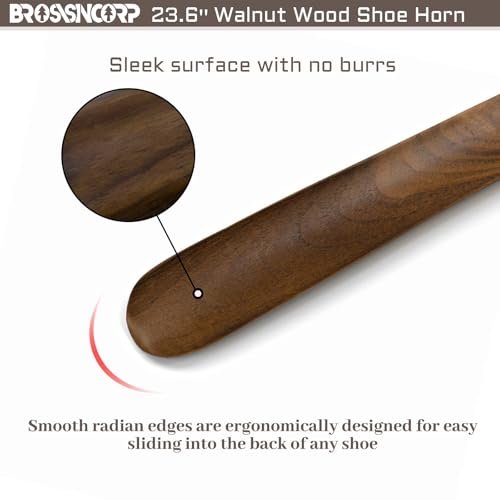
| Finish | Sanded smooth, no burrs or rough edges |
| Storage feature | Leather hanging strap included |
| Color / species | Black walnut (natural dark brown grain) |
| Rating | 4.7 out of 5 (251 ratings) |
At 23.6 inches and 0.25 pounds, this horn is long enough to use standing upright and light enough to handle comfortably — the combination that makes it practical for daily use rather than just occasional wear.
What to Look for in a Long-Handle Shoe Horn
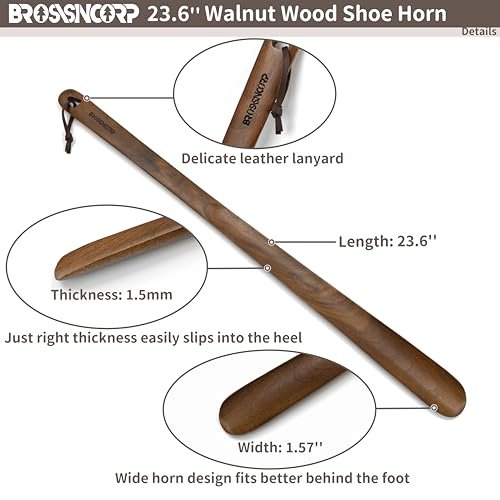
The single most important spec in a long-handle shoe horn is handle length — and "long" covers a wide range. A 12-inch horn still requires significant bending for most adults. An 18-inch horn gets you closer, but you're still leaning forward to reach your heel. At 23.6 inches, the Brosisincorp horn puts the working tip at heel level for the average adult standing upright. Before buying any long-handle horn, measure from your standing hand position down to the floor — you want a horn that clears that distance with a few inches to spare.
Material is the second real differentiator. The market has three categories: plastic, stainless steel, and wood. Plastic horns at any length flex under pressure and develop stress cracks at the neck over time — most break at the taper where the handle meets the working blade. Stainless steel horns hold up mechanically, but the smooth metal surface can catch on fine leathers and suede. Solid black walnut is naturally smooth-grained and has enough density to guide a heel without bending, while the wood surface is gentler on shoe materials than bare metal.
Construction method matters as much as material. A shoe horn made from laminated wood pieces or a wood-veneer handle over a plastic core will behave like its weakest component. The Brosisincorp horn is one unbroken piece of black walnut — no glue joints, no hidden core — which means there's no seam to split under lateral pressure. The handle width is 1.57 inches, wide enough to grip securely but narrow enough to slide cleanly alongside the heel counter of a dress shoe.
Who This Horn Works For and How to Use It
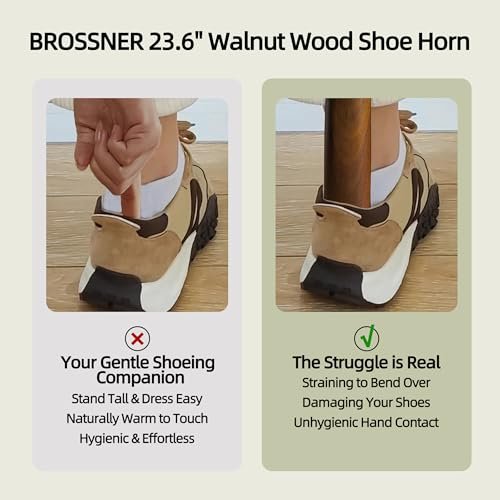
The 23.6-inch handle solves a specific physical problem: putting shoes on without bending forward from the waist. For adults managing lower back stiffness, hip replacements, knee replacements, or general flexibility loss that comes with age, that bend — repeated twice a day, every day — adds up to real discomfort. The horn lets you hold the handle at roughly hip height, guide the blade behind your heel, and slide your foot in while staying upright. No chair required, no shoe removal station, no complicated setup.
It also works well for anyone who wears dress shoes or leather boots that have a stiff heel counter — the kind of footwear that won't collapse enough to just push your foot in without help. Using your hand to force the heel down eventually breaks the counter down. A shoe horn guides the foot in cleanly and preserves the structure of the shoe. The walnut surface is smooth enough that it won't snag on leather or suede lining.
One practical note on technique: use the horn as a guide, not a lever. Place the blade flat against the inside back of the shoe, let your heel slide down against the wood surface, and let gravity and your weight do the work. Applying sideways torque — using the horn to pry or force — puts lateral stress on any horn regardless of material. Used correctly, a solid walnut horn like this will handle daily use for years without issue.
Keeping a Wood Shoe Horn in Good Shape
Black walnut is one of the harder domestic hardwoods and doesn't need much intervention to stay in good condition. The Brosisincorp horn is sanded to a smooth finish before it ships, which means there are no burrs or rough patches that would snag shoe lining or work into a crack over time. For most users, the primary maintenance task is simply keeping it dry between uses — don't leave it in a puddle of water, and don't store it in a bathroom where it sits in steam daily.
If the surface starts to feel slightly rough after a year or two of use, a light pass with 400-grit sandpaper followed by a thin coat of mineral oil or beeswax will bring it back. This is a low-frequency task, not a weekly ritual. The leather hanging strap serves a storage function beyond decoration — hanging the horn rather than dropping it in a drawer or bucket keeps the tip from getting dinged and keeps the surface clean.
- Storage: hang from the leather strap on a hook near your entryway — keeps the horn accessible and the tip undamaged
- Cleaning: wipe with a dry or slightly damp cloth; no soaking, no dishwasher
- Conditioning: a thin coat of mineral oil or beeswax once or twice a year is enough to maintain the finish
- Avoid: leaving it in prolonged direct sunlight, which can dry out and lighten the walnut's natural dark color over time
Frequently Asked Questions
Is 23.6 inches actually long enough to use without bending?
For most adults of average height, yes. The working tip reaches heel level when you hold the handle at roughly hip height — which means you stay upright through the whole motion. If you're significantly taller than average, you may still lean slightly, but it's a fraction of the bend required by a standard 10- or 12-inch horn. If you're unsure, measure from your hip to the floor while standing and compare that to 23.6 inches before buying.
Will a wood shoe horn scratch or snag my leather shoes?
Not if it's properly finished. The Brosisincorp horn is sanded to a smooth finish with no burrs or rough edges — the walnut surface acts as a gentle guide rather than an abrasive. It's less likely to catch on dress-shoe leather or suede lining than a bare stainless steel horn, which has a harder, shinier surface that can create friction on fine materials.
Is this horn going to snap? I've had plastic ones break on me.
The failure mode you're describing — snapping at the neck — is common in plastic horns because the taper creates a stress concentration point in a material that doesn't have much tensile strength. Solid black walnut is a dense, tight-grained hardwood that handles compression and bending loads well. The key is using it correctly: place the blade flat against the heel counter and let your weight slide your foot in. Applying sideways torque — twisting or prying — can stress any horn regardless of material. Used as a guide rather than a lever, this one will hold up to daily use.
What's the leather strap for?
It's a hanging strap — loop it over a hook near your entryway so the horn is always accessible and stored with the tip off the floor. Keeping it hung rather than tossed in a drawer protects the tip from getting dinged and keeps the surface clean. It also makes the horn easier to grab when you're heading out the door in a hurry.
Does this horn need any maintenance, like oiling?
It's low-maintenance but not zero-maintenance. The horn ships sanded smooth and ready to use — no initial treatment required. If the surface starts to feel slightly rough after a year or two, a light pass with fine-grit sandpaper and a thin coat of mineral oil or beeswax will restore it. Keep it dry between uses and out of sustained direct sunlight, which can dry out the wood over time. That's about the full extent of what it needs.